Disclosure: This post may contain affiliate links. If you make a purchase through these links, I may earn a small commission at no extra cost to you. See my full disclosure.
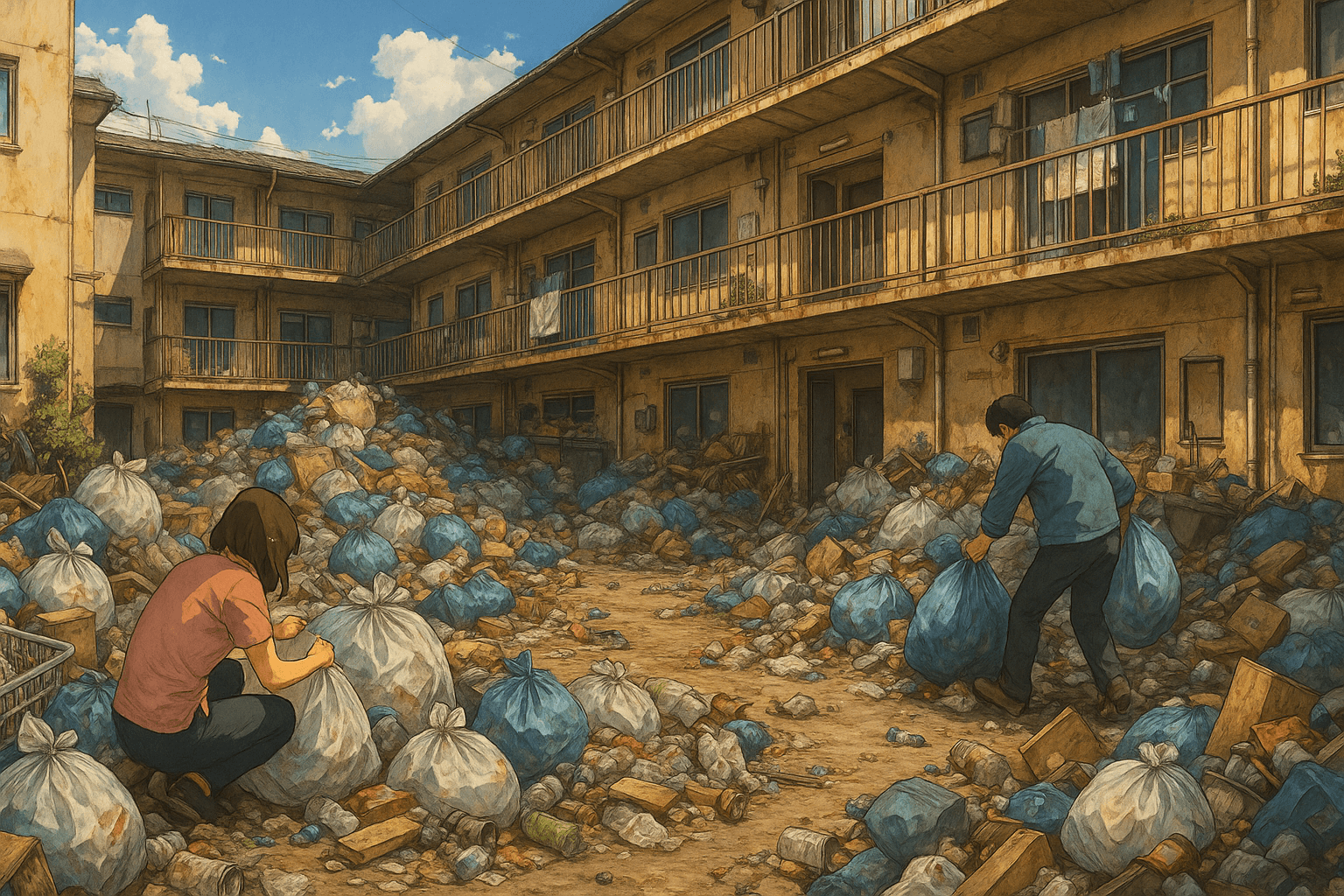
The Psychology Behind Garbage Chaos in Subsidized Housing
Garbage problems in subsidized housing run deeper than laziness or bad habits. They're rooted in disconnection, neglect, and a breakdown of shared accountability that spreads through a building faster than you'd think. As a building superintendent, I've watched this cycle play out up close, and the damage it does goes well beyond a messy hallway.
I've worked in a lot of buildings. Market-rate rentals, mixed-income properties, fully subsidized units. And if there's one thing that consistently signals deeper trouble in a building, it's the garbage situation. Not just the volume of it, but the way it accumulates. The placement. The attitude around it.
Garbage chaos in subsidized housing is not really a garbage problem. It's a people problem. And more specifically, it's a psychology problem.
It Starts With Disconnection
Here's something most property managers don't talk about enough. A large percentage of tenants in subsidized housing didn't choose their building the way a market-rate renter does. They were placed. They may have been on a waiting list for years, accepted the first available unit, and moved into a space that never quite felt like theirs.
When people don't feel ownership over a space, they don't treat it the way they'd treat something they chose and paid full price for. That's not an excuse. It's just human psychology. I've seen this play out in buildings where tenants wouldn't dare leave a bag in the hallway of their own unit floor, but had no problem tossing something near the elevator on another floor. That invisible line between "mine" and "not mine" matters more than people realize.
Subsidized housing, by its structure, can blur that line significantly.
Neglect Sends a Message
Here's what I always tell new property managers: a dirty building gives people permission to make it dirtier. The broken window theory is real, and I've lived it. Once one bag gets left outside the garbage room door and nobody deals with it for 48 hours, a second bag appears. Then a third. Within a week you've got a pile. Within two weeks you've got a health hazard.
The message neglect sends is that nobody is watching, nobody cares, and there are no real consequences. Some tenants, especially those who've lived in environments where rules were never consistently enforced, respond to that signal by doing whatever is convenient. Not out of malice. Out of habit, and because the environment is telling them it's acceptable.
Had a situation once where a garbage room was left unlocked and unmonitored for about three weeks during a staff transition. The state of that room when I got to it was genuinely hard to look at. That wasn't three weeks of garbage. That was three weeks of people responding to an environment that stopped communicating expectations.
When Disorder Spreads, It Spreads Fast
Disorder in a building has a contagion effect. It doesn't stay in the garbage room. It moves into the laundry room, the stairwells, the lobby. Once a space looks like nobody is accountable for it, it becomes a kind of shared dumping ground, physically and emotionally.
I've watched this affect tenant culture in real time. The tenants who do care, and there are always more of them than people assume, start to pull back. They stop reporting issues because they don't think anyone will respond. They stop engaging with neighbours because the shared spaces feel hostile or embarrassing. That loss of community connection is one of the most underreported consequences of garbage chaos in subsidized housing.
And once those anchor tenants disengage, the informal social controls that keep a building running, neighbours reminding each other of rules, people holding the elevator for each other, small acts of mutual respect, those start to disappear too.
The Real Cost to Respectful Tenants
Let's be honest about who suffers most from this. It's not building management, though we feel it too. It's the tenants who are doing everything right.
I'm talking about the elderly resident who has to navigate a hallway full of someone else's discarded furniture to get to their unit. The young family whose kids are breathing in mould-adjacent air because organic waste has been sitting in a garbage room for days past collection. The person with respiratory issues who can't use the elevator because someone left a pile of garbage bags that's been sitting there fermenting since Tuesday.
The stress is real. I've had tenants come to me near tears over this. Not just frustrated. Genuinely distressed. Because this is their home, and it feels like nobody is protecting it.
Long-term exposure to a chaotic living environment is linked to elevated stress, reduced sense of safety, and decreased mental health outcomes. That's not my opinion, that's well-documented. And it hits harder when the people experiencing it have limited options for moving elsewhere.
The Toll on Building Staff
I want to talk about burnout here because it doesn't get enough air time.
Superintendents and property managers in subsidized buildings are often operating with fewer resources, higher tenant-to-staff ratios, and more complex social dynamics than their counterparts in private market buildings. When garbage chaos is a constant, it doesn't just add tasks to the list. It chips away at morale.
You spend hours cleaning a space, enforcing rules, issuing notices, and then you show up on Monday morning and it's back to square one. After a while, some staff start to emotionally detach. They stop going the extra mile because the extra mile keeps getting undone. That's how you lose good people, and how the ones who stay start operating on autopilot instead of actually managing.
I've been there. There's a particular kind of exhaustion that comes from fighting the same battle every single week with no structural support and no accountability systems behind you.
Accountability Without Shame
Here's where I think the real opportunity sits. Addressing garbage chaos in subsidized housing requires actually understanding why it's happening in your specific building before defaulting to enforcement.
Sometimes it's a signage issue. Sometimes the garbage room layout is genuinely confusing and people don't know where things go. Sometimes there are language barriers and nobody has ever communicated the rules in a format that works for the actual population of the building. I've seen garbage problems cut in half just by adding clear visual guides to the garbage room in multiple languages.
Sometimes it's a relationship issue. Tenants who have a decent relationship with their superintendent are more likely to respect the building's common areas. Not because they're trying to impress anyone, but because it's harder to trash a space when you associate it with a person you have a basic human connection with.
And yes, sometimes it requires consistent enforcement, documented warnings, and real consequences. Both things can be true.
The Property Pays the Price
Beyond the human cost, garbage mismanagement does measurable damage to buildings. Pest infestations start in garbage rooms. Mould grows in spaces where organic waste has been sitting too long. Floors get scratched and stained from dragged bags. Elevators get damaged from overloaded carts. None of this is cheap to fix.
For subsidized housing operators who are already working with tight budgets and aging infrastructure, these costs compound fast. Money spent on remediation and repairs is money not spent on genuine improvements to the building or tenant services.
What I would do
If you're a property manager or superintendent dealing with this right now, here's what I'd suggest starting with: walk your garbage room and surrounding areas as if you were a tenant seeing it for the first time. What does it communicate? Does it look like someone cares about it? Is the signage clear? Is the lighting adequate? Is it easy to use?
Then talk to a few tenants, not to interrogate, but to genuinely ask what makes it hard to dispose of garbage properly. You might be surprised by what you hear.
The physical environment and the social environment shape each other. Fix one, and you start to shift the other. It won't happen overnight, and there's no single solution that works for every building. But it starts with understanding that what looks like a garbage problem is almost always something else underneath.
Loading reactions…
Comments
New notes are reviewed before they appear. Be kind and on-topic.
Loading comments…
Related posts
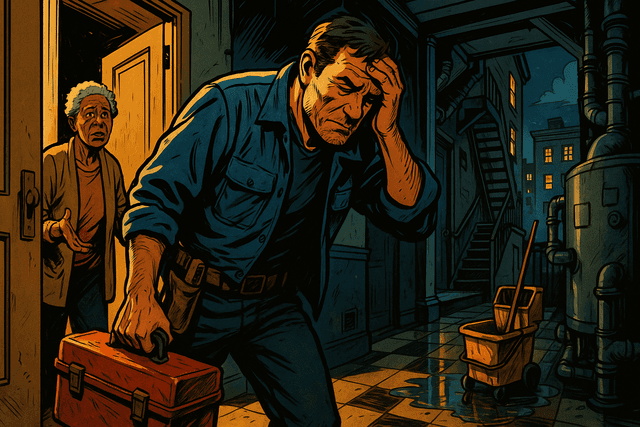
The Fine Line Between Compassion and Burnout in Working as a Building Superintendent
Nobody warned me that the hardest part of this job wouldn't be the boilers or the work orders, it would be the people, and how much of their weight I'd end up carrying home. This isn't a post about solutions. It's about naming something that doesn't get named enough in this line of work.
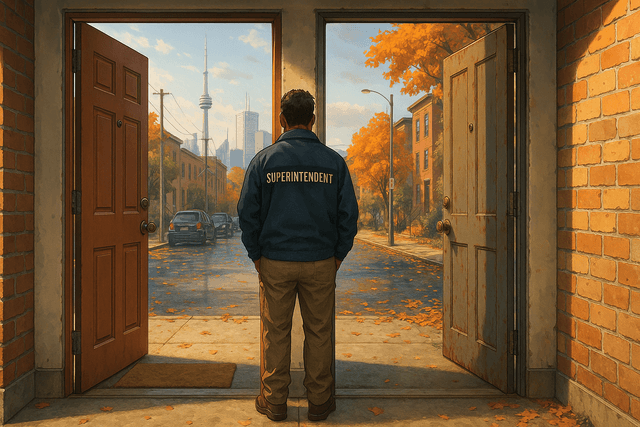
Same Title, Very Different Job: What Sets Subsidized Housing Supers Apart from Private Apartment Superintendents
The job title says superintendent on both doors, but the responsibilities, the pressure, and the day-to-day reality couldn't be more different. Whether you're considering a move from private to subsidized housing or just trying to understand why the role feels so much heavier, this breakdown is from someone who has seen both sides.

10 Things People Don't Understand About Running a Subsidized Housing Building
Being a superintendent at a subsidized housing building in Toronto is nothing like people picture it. No, you don't live there, no, you're not on call 24/7 by choice, and yes, the phone still rings at 9 p.m. Here's the real picture from someone who's lived it.