Disclosure: This post may contain affiliate links. If you make a purchase through these links, I may earn a small commission at no extra cost to you. See my full disclosure.
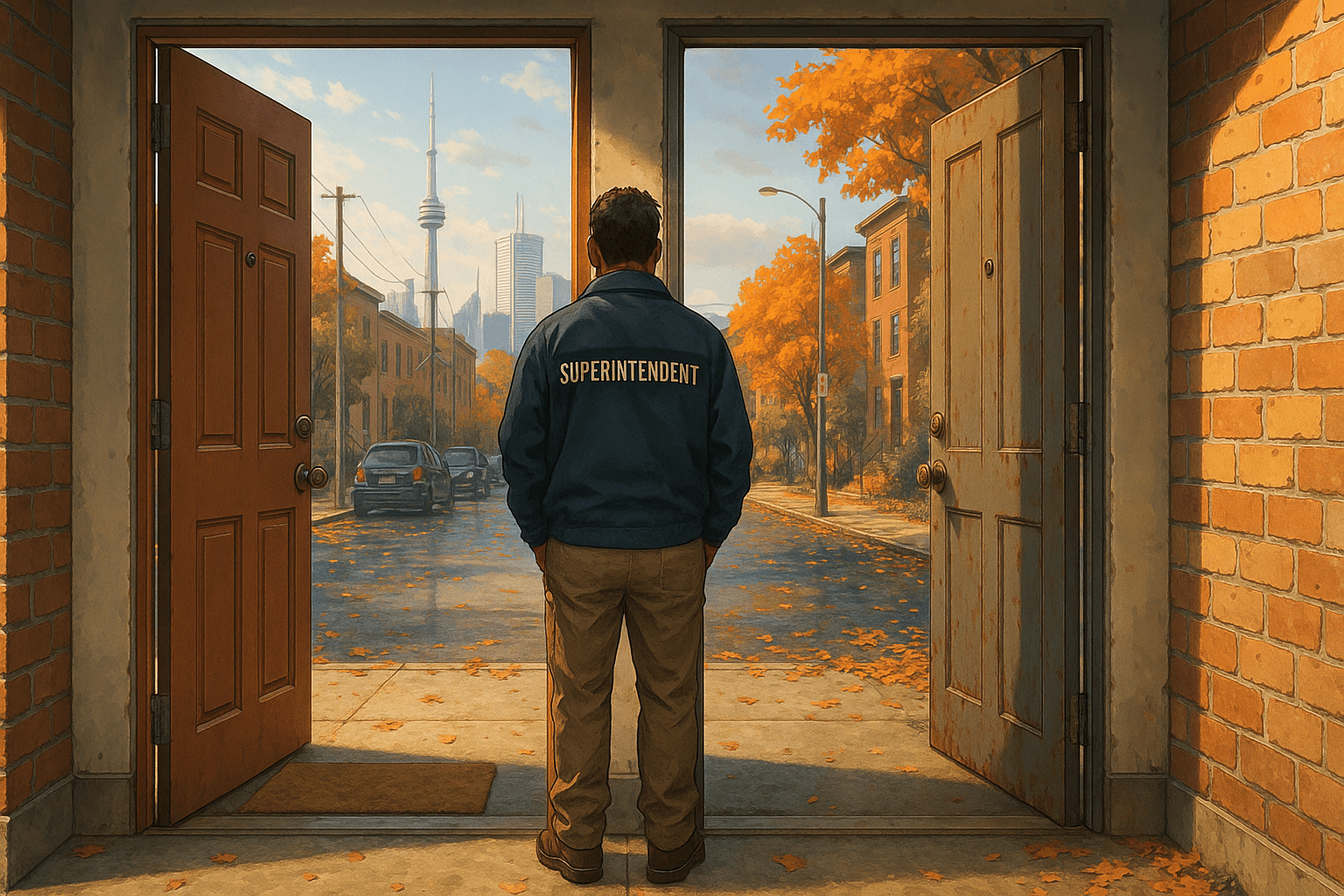
Same Title, Very Different Job: What Sets Subsidized Housing Supers Apart from Private Apartment Superintendents
The job title says superintendent on both doors, but the responsibilities, the pressure, and the day-to-day reality couldn't be more different. Whether you're considering a move from private to subsidized housing or just trying to understand why the role feels so much heavier, this breakdown is from someone who has seen both sides.
The business card might say the same thing. The uniform might look similar. But anyone who has worked as a superintendent in both a private apartment building and a subsidized housing complex knows these are not the same job. Not even close.
I've had conversations with supers who made the switch from one to the other and were completely caught off guard. Not because they weren't capable, but because nobody told them what they were actually walking into.
The Basics Look the Same at First
On paper, both roles involve the same core tasks. You're maintaining the building, handling work orders, doing suite inspections, responding to emergencies, keeping common areas clean, and dealing with whatever breaks on a Friday afternoon right before a long weekend. That part doesn't change.
But the moment you go past the surface level, the two jobs start to look very different.
The Tenant Dynamic Is a Completely Different Experience
In a private apartment, most tenants signed a lease, passed a credit check, and chose to be there. That doesn't mean they're always easy to deal with, but there's a baseline of transactional accountability. They're paying market rent. They generally want to stay. That shapes how most interactions go.
Subsidized housing changes that dynamic entirely. You're working with a population that often includes people facing housing instability, mental health challenges, addiction, trauma histories, and complex social situations. I'm not saying that as a judgment. I'm saying it because it directly affects how you do your job every single day.
What I tell people who are considering this kind of role is simple: you are not just maintaining a building. You are maintaining a community for people who often have nowhere else to go. That weight is real.
The Scope of Work Is Broader Than the Job Description
In private buildings, your scope usually stays in a recognizable lane. Mechanical issues, suite repairs, common area upkeep, maybe some light security responsibilities. You know what the job looks like when you wake up in the morning.
In subsidized housing, no two days are the same, and that's not a cliché. I've seen supers in those buildings handle situations that would absolutely not be in anyone's formal job description. Wellness checks on tenants who haven't been seen in days. De-escalating a situation in the hallway at 2am. Coordinating with social workers, outreach teams, and emergency services. Finding a way to explain a maintenance delay to someone who is already at their limit emotionally.
The paperwork load is also heavier. There's more documentation, more compliance requirements, more formal processes around inspections, incident reporting, and tenant file management. Private building supers deal with paperwork too, but the volume and the stakes feel different.
The Building Stock Tends to Be Older and More Demanding
This is one that doesn't get talked about enough. A lot of subsidized housing was built decades ago, and deferred maintenance is a real issue in the sector. You might be dealing with aging plumbing, outdated electrical, elevators that have seen better days, and infrastructure that needs constant attention.
Had a situation once where a building I was familiar with had a laundry room where three of the five washers were perpetually out of service, and getting parts was a bureaucratic process that could take weeks. In a private building, a property owner usually wants that fixed fast because it affects rent revenue. In subsidized housing, the funding and approval chains can be longer and slower.
That's frustrating for the super who has to face the tenants asking about it every single day.
The Reporting Structure Is More Complex
In private buildings, you often report to a property manager or directly to an owner. The chain is short. Decisions can get made quickly if the owner is motivated.
Subsidized housing usually sits inside a larger organizational structure. There are boards, policy frameworks, government oversight, and community accountability layers. That means more meetings, more formal communication channels, and sometimes more red tape before you can get something approved or repaired.
This isn't a knock on the system. There are good reasons those structures exist. But as a super, you need to know that you'll be navigating a more complex environment, and patience is not optional.
The Emotional Load Is Real and It's Ongoing
Nobody talks about this enough. Working in subsidized housing, you're regularly exposed to the harder sides of people's lives. You might find out a tenant passed away. You might witness a crisis. You might be the only stable presence some of these residents interact with in a given week.
That accumulates. I've spoken to supers in these buildings who genuinely care deeply about their tenants and also feel burned out in ways that are hard to explain to someone who hasn't been there. The connection to the community is meaningful, but it carries a cost.
Building in ways to decompress and protect your own mental health isn't optional in this role. It's maintenance, just a different kind.
The Satisfaction Can Also Be on Another Level
I don't want this to sound like subsidized housing super jobs are something to avoid. That's not my point at all. The supers I've met who have been in those roles for years often describe a sense of purpose that's hard to match. You are genuinely making a difference in people's lives. You are the person who keeps the lights on, literally and sometimes figuratively, for a community that depends on stable housing to function.
That matters. And if you're the kind of person who is drawn to that kind of work, the role can be deeply rewarding in ways a private building rarely offers.
So Which One Is Right for You?
If you're coming from private building experience and considering a move to subsidized housing, go in with clear eyes. The technical skills transfer. The people skills need to flex. Your patience, your empathy, and your ability to navigate complicated systems will be tested regularly.
If you're already in subsidized housing and wondering why your job feels so much heavier than what your counterpart in a private building describes, it's because it is heavier. You're not imagining it. And you deserve to have that recognized.
The title says superintendent on both doors. But behind one of those doors, the job asks a lot more of you. Know what you're signing up for, make sure you're supported, and if you're already in it, give yourself credit for doing work that most people don't fully understand.
If you're evaluating a superintendent position, ask during the interview about the tenant support services available on-site or through referral. In subsidized housing, how well those systems are set up tells you a lot about how much the organization actually supports its staff. A building with zero connection to social services and a super who is expected to handle everything alone is a red flag worth paying attention to before you accept the offer.
Loading reactions…
Comments
New notes are reviewed before they appear. Be kind and on-topic.
Loading comments…
Related posts

The Psychology Behind Garbage Chaos in Subsidized Housing
Garbage problems in subsidized housing run deeper than laziness or bad habits. They're rooted in disconnection, neglect, and a breakdown of shared accountability that spreads through a building faster than you'd think. As a building superintendent, I've watched this cycle play out up close, and the damage it does goes well beyond a messy hallway.
What Is a Notice of Entry (NOE) and What It Isn't
A Notice of Entry is one of the most misunderstood documents in residential buildings. As a superintendent, I've seen tenants panic over them and others ignore them entirely, and both reactions cause problems. Here's what an NOE actually means and how it fits into the repair process.
What Actually Happens When You Report a Leaky Faucet
A leaky faucet sounds simple until you are the one responsible for fixing it, documenting it, finding the right part, and making sure it does not turn into water damage. This is how a small plumbing call usually goes from the superintendent side.