Disclosure: This post may contain affiliate links. If you make a purchase through these links, I may earn a small commission at no extra cost to you. See my full disclosure.
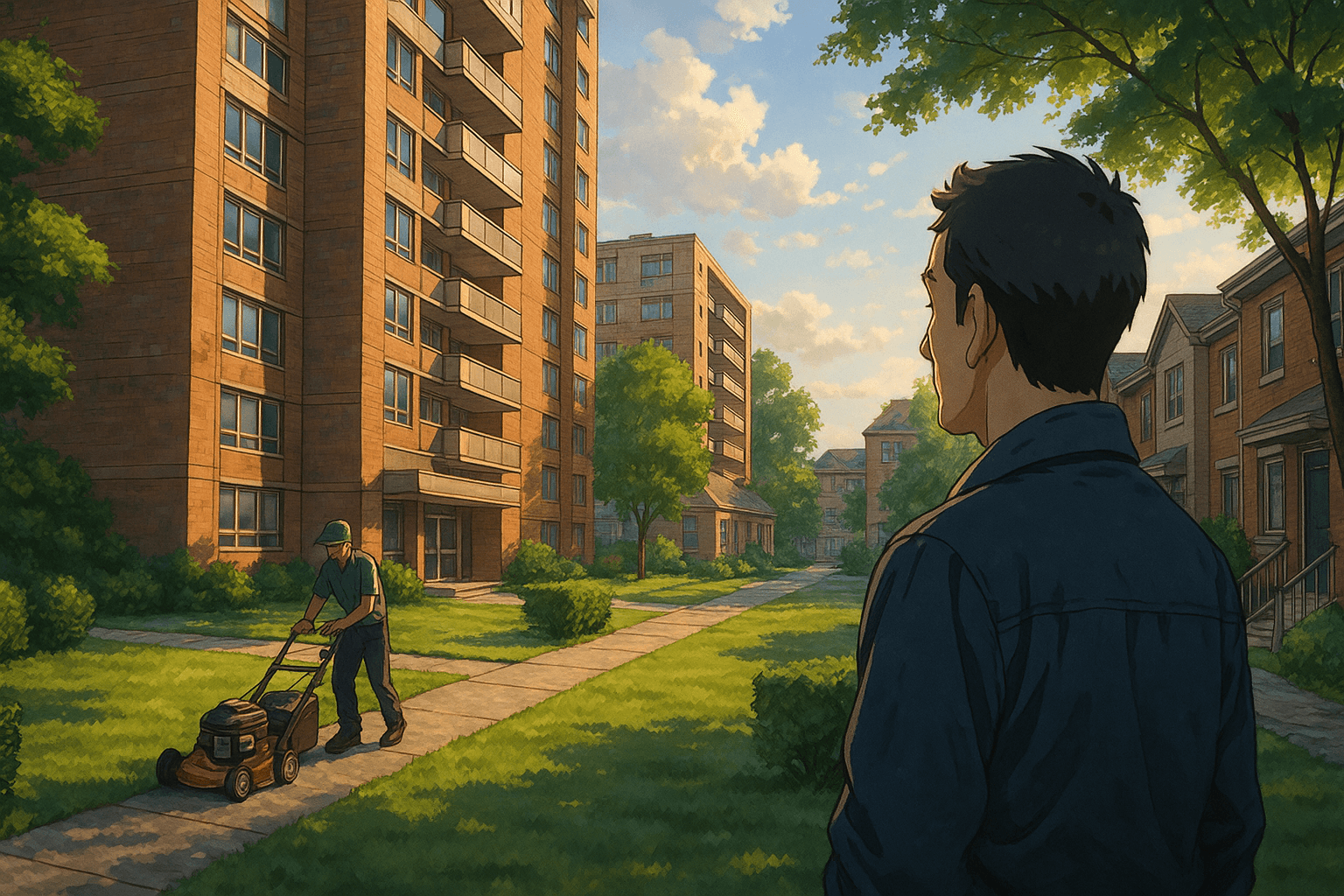
Why I Didn't Yell at the Landscaping Guy
A tenant wanted me to tear into the landscaping crew's guy right in front of her after her potted plants got cleared during a routine cleanup. I didn't. Here's why that decision matters more than most people realize and what I did instead.
She was waiting for me near the front entrance when I came around from the side of the building. Arms crossed, visibly upset. I could tell before she even spoke that this wasn't going to be a quick conversation.
Her name, I'll call her Marlene, had a small collection of fruit-bearing plants arranged along the edge of the property near the main walkway. Not a lot. Maybe five or six containers. Marigolds, a tomato plant, a couple of things I couldn't name. She'd been tending to them all summer. Not my favourite situation as far as placement goes, because that area sits in a bit of a gray zone. It's technically common property, but tenants in units at grade have used that strip for years without issue, and we've never formally addressed it.
The landscaping crew had come through that morning for a scheduled cleanup. Trimming, edging, clearing out anything that looked like overgrowth. And one of the crew members, without thinking twice, cleared Marlene's plants. Pulled everything. Probably took him thirty seconds. To him, it looked like a cluster of random stuff growing where it shouldn't be. To her, it was months of work.
By the time she found me, the plants were already in the bin.
What She Actually Wanted
She wanted me to go find that crew member and let him have it. In front of her. She said it a couple of different ways, but that's what she was asking for. She wanted to see accountability delivered loudly and visibly, right there on the spot.
I get it. She was hurt. The plants weren't the point. The point was that something she cared about got taken without a second thought, and she wanted someone to feel the weight of that.
I didn't do it. And I want to be clear: it wasn't because I was protecting the guy or brushing off what happened. It was because that approach doesn't actually fix anything, and it costs you in ways that add up over time.
What I did do was apologize to her directly. Not "I'm sorry you feel that way." I don’t do that, that is so fake. That’s what they want us to tell our clients back when I was still working as a technical support agent in a call centre for a big tech company downtown. I give a real apology. I told her that we should have had clearer communication with the crew about what in that area belongs to residents, and that I was going to make sure this didn't happen again. I told her I'd look into whether there was anything we could do about the plants, though honestly, once they're in the bin after a crew visit, that's usually the end of it.
She wasn't fully satisfied. I didn't expect her to be. But she heard me, and she walked away with some sense that someone was taking it seriously.
The Conversation That Actually Mattered
After that, I tracked down the crew member. Not to yell at him. To talk to him. Yelling doesn’t solve anything, it just hurts someone else’s feelings. I always start with “What happened?” This is a good start of every conversation between a staff and the team leader. It opens up the conversation with a greeting, it changes the mood of the staff from defensive to cooperative. It’s my way of saying: “I’m here to clear things up”, “I’m not here to judge you”, and “I want to hear your side of the story.”
I walked him over to that section of the property and I showed him, physically, where the resident-maintained area begins and where common ground ends. It's not obvious. I wouldn't have known either if I hadn't been managing this building for as long as I have. I told him that anything in that strip that looks like it might belong to someone should be flagged before it gets touched. Come find me, call the office, leave it alone for the day. Whatever it takes, but don't assume.
I also told him something I tell every contractor who works on this site: don't argue with tenants, don't explain yourself to tenants, just come get me. That's not me covering for him. That's protecting both of us. A crew member getting into a back-and-forth with an upset tenant in a housing complex is a situation that escalates fast, and never in a direction anyone wants.
He was apologetic. I think he genuinely hadn't considered that what he was clearing might belong to someone. That's not laziness, that's a communication gap. And that one's on me for not setting expectations clearly before the crew started work.
The Part Nobody Talks About
Here's the thing about contractor relationships in a building like this: they're quiet, long-term assets, and you can blow one up in an afternoon if you're not careful.
The landscaping crew that services this property has been coming here for a while. They show up when they say they will. When I call the supervisor with a concern, it gets addressed. When we have a last-minute request, they try to fit it in. That kind of reliability doesn't appear on any contract. You don't negotiate for it. You build it over time, through a hundred small interactions where both sides feel respected.
Had I lit into that crew member in front of Marlene, I might have gotten thirty seconds of tension relief for her. But I'd have humiliated someone who didn't deserve to be made an example of publicly, damaged my relationship with that crew's supervisor once word got back, and signalled to everyone watching that I'm the kind of superintendent who throws contractors under the bus when a tenant gets loud.
That reputation follows you. Contractors talk. You end up on the list of sites people don't want to work, and eventually your service starts reflecting that.
Where It Landed
I followed up with Marlene a day later. She'd calmed down. I let her know that I'd spoken with the crew and walked through the boundaries with them. She appreciated that.
I also flagged the gray-zone strip as something that needs to be sorted out properly. Whether that means formally designating it as a resident garden area with some guidelines attached, or communicating to tenants that it's common property and can't be used for personal planting, I'm not sure yet. That's a conversation that goes up the chain, not something I can decide on my own. But I've got a note in to the right people.
The plants are gone. That part I can't fix. But the situation that caused it? That one's at least on its way to being addressed.
I've seen superintendents try to manage tenant frustration by making a public show of discipline with contractors. It almost never actually satisfies the tenant, and it almost always costs you something with the vendor. The better move is almost always to separate those two conversations completely: address the tenant with sincerity, address the contractor with clarity, and handle it in the right order.
It's not the dramatic response. But it's the one that keeps the building running the next day, and the day after that.
Loading reactions…
Comments
New notes are reviewed before they appear. Be kind and on-topic.
Loading comments…
Related posts

Honesty Builds Trust: Why Character Matters in Building Superintendent Work
Trust isn't something you can manufacture or fake in this profession. As a building superintendent, your character shows in the small moments, and those moments add up to something that either earns you respect or quietly costs you it. Here's why honesty is the most practical tool I carry.

Why Skipping the Work Order and Going Straight to the Boss Actually Slows Things Down
Some tenants think going straight to the top gets problems solved faster. In my experience, it usually does the opposite. Here's what actually happens when someone skips the process, and why following proper channels is the fastest way to get your issue fixed.

Sump Pump Down on a Friday Afternoon
The last thing you want to see at 3:30 on a Friday is a supervisory alarm lighting up the fire panel. This week it happened twice, and the sump pump was the reason both times. Here's how that afternoon went.