Disclosure: This post may contain affiliate links. If you make a purchase through these links, I may earn a small commission at no extra cost to you. See my full disclosure.
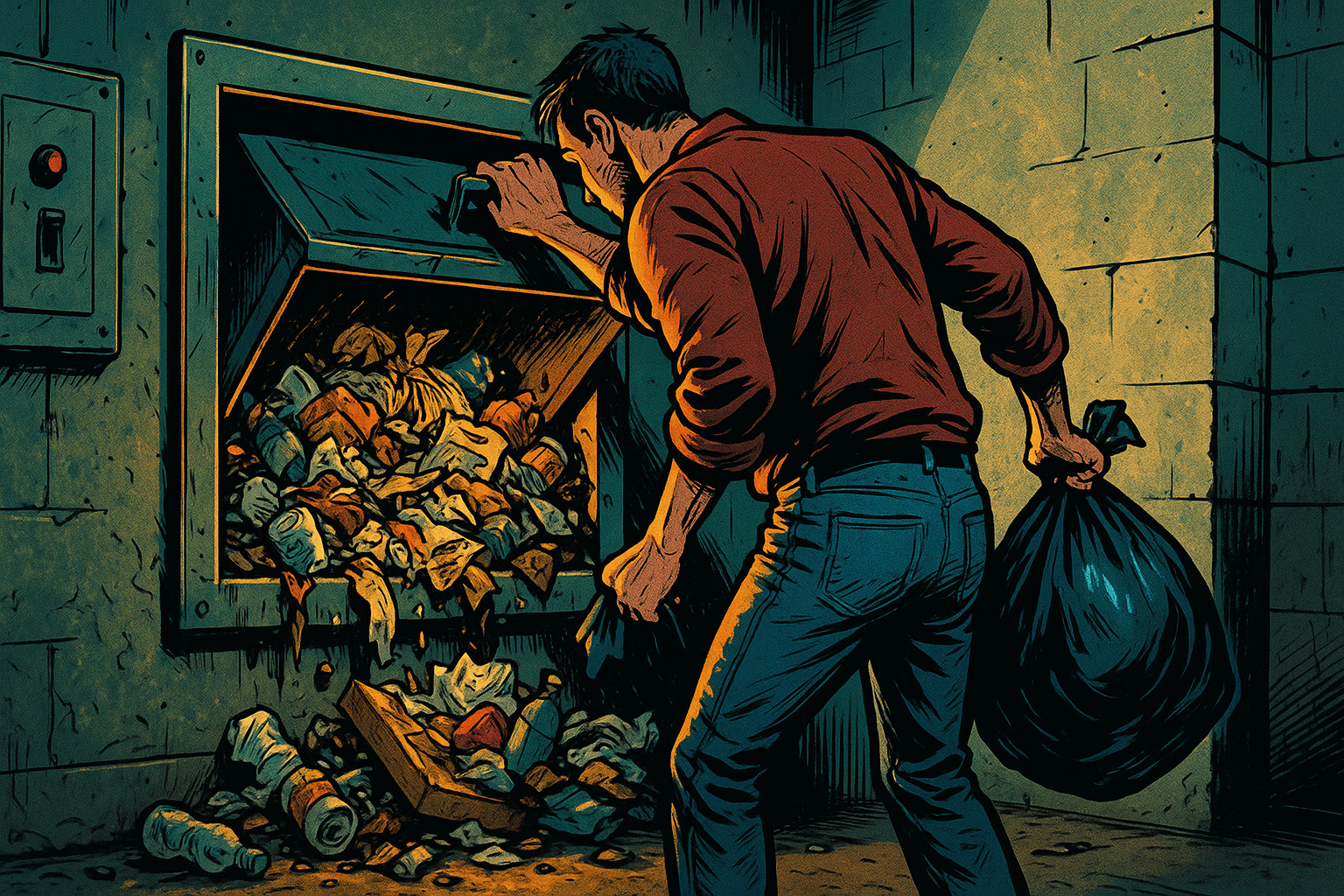
This Isn’t a Landfill
I have pulled bed frames, carpet, wood, and other nonsense out of compactor areas that were never built for that kind of abuse. Some residents truly do not know the rules. Some know and do it anyway. Either way, if nobody manages the problem, the compactor room turns into a weekly headache.
I have pulled a full-size metal bed frame out of a compactor chute.
I have found carpet jammed so far in that it took two of us and a good chunk of the morning to deal with it.
I have seen a broken wooden bookshelf treated like regular garbage because someone decided the chute was easier than arranging bulk pickup.
If you work in a multi-residential building, you already know the feeling. You open the garbage room door and immediately think, not again.
Compactor misuse never disappears completely. But there is a big difference between an occasional problem and a building where the garbage room becomes a weekly disaster. That difference usually comes down to whether anyone is actually managing it.
A damaged compactor is not a small problem
When the compactor goes down, the whole building feels it.
Garbage starts backing up. Residents complain. Staff have to manage overflow. Vendors get called. If the machine needs parts, now you are waiting. If it happens on a Friday, good luck enjoying your weekend.
The repair bill is only one part of it.
There is also the safety side. Sharp metal, wood, carpet, Christmas trees, and oversized items do not belong in that machine. Someone eventually has to clear the jam, and that someone is usually building staff or a vendor. I am not interested in anyone getting cut, crushed, or hurt because a resident did not want to follow the bulk item process.
Some residents honestly do not know
Not every misuse case is malicious.
Some people move in and nobody explains the garbage room. They see a chute, they see a machine, and they assume it takes everything. They do not know where bulk items go. They do not know who to call. They do not know cardboard has to be broken down.
That part is fixable.
A simple move-in sheet helps. Nothing fancy. What goes in the chute. What goes to bulk pickup. What never goes in the compactor. Who to call. Where to put large items. If your building has multiple languages, make it visual too.
You cannot expect people to follow a process nobody explained.
The signs have to be impossible to miss
A tiny faded sign near the door does not count.
If the problem happens at the chute, put the message at the chute. Eye level. Plain language. Big enough to read. Specific examples.
"No large items" is too vague.
"No metal, wood, carpet, mattresses, furniture, electronics, paint, or Christmas trees" is better.
Pictures help too. A photo of a jammed compactor gets the point across faster than a paragraph, especially in a building where not everyone reads English comfortably.
The sign should interrupt the bad habit right before it happens.
Cameras changed the behaviour
A camera in the garbage room made a real difference where I work.
It did not solve everything. Nothing does. But large item dumping dropped once people knew there was a record.
It also gave me something concrete when a problem happened. If I find a carpet jammed into the chute on Tuesday morning, I am not guessing. I can review footage, identify the unit, and follow up properly.
That matters because notices without proof are weak. Documentation gives the process teeth.
Follow-through is where buildings fail
A lot of buildings do the easy part. They put up signs. They send a memo. They tell residents not to misuse the compactor.
Then someone ignores all of it and nothing happens.
Residents notice that. They learn very quickly whether the rule is real or just paper.
If a unit is confirmed dumping large items or damaging equipment, document it. Create the work order. Save photos. Issue the proper notice. Escalate through the right process if it repeats.
You do not need to be aggressive. You need to be consistent.
Make the right option easier
If bulk pickup is hard to understand, people will use the wrong option.
Put the bulk item instructions where the problem happens. Add a phone number. Add a QR code if your building uses one. Explain whether it is free. Explain where items go and when.
Remove the excuse before it becomes one.
The goal is fewer bad mornings
There is no perfect fix.
Some residents will still do whatever they want. New people move in. Old habits come back. Staff get busy. Signs get ignored.
But consistent signage, cameras, move-in instructions, real follow-up, and an easy bulk pickup process make a difference. I have seen it.
The goal is not a perfect garbage room. The goal is fewer jams, fewer repair calls, fewer angry residents, and fewer mornings where staff start the day pulling something out of a machine it never should have entered.
That is a win in my books.
Loading reactions…
Comments
New notes are reviewed before they appear. Be kind and on-topic.
Loading comments…
Related posts

What Is a Notice of Entry (NOE) and What It Isn't
A Notice of Entry is one of the most misunderstood documents in residential buildings. As a superintendent, I've seen tenants panic over them and others ignore them entirely, and both reactions cause problems. Here's what an NOE actually means and how it fits into the repair process.
What Actually Happens When You Report a Leaky Faucet
A leaky faucet sounds simple until you are the one responsible for fixing it, documenting it, finding the right part, and making sure it does not turn into water damage. This is how a small plumbing call usually goes from the superintendent side.

The Compactor Room Is Not a Magic Hole
Most tenants only notice the garbage compactor when it stops working. I get it. When it is doing its job, you toss the bag in and move on. But that machine is one of the things keeping a building from turning messy fast, and it does not take much abuse to make everyone’s day worse.