Disclosure: This post may contain affiliate links. If you make a purchase through these links, I may earn a small commission at no extra cost to you. See my full disclosure.
The Fine Line Between Compassion and Burnout in Working as a Building Superintendent
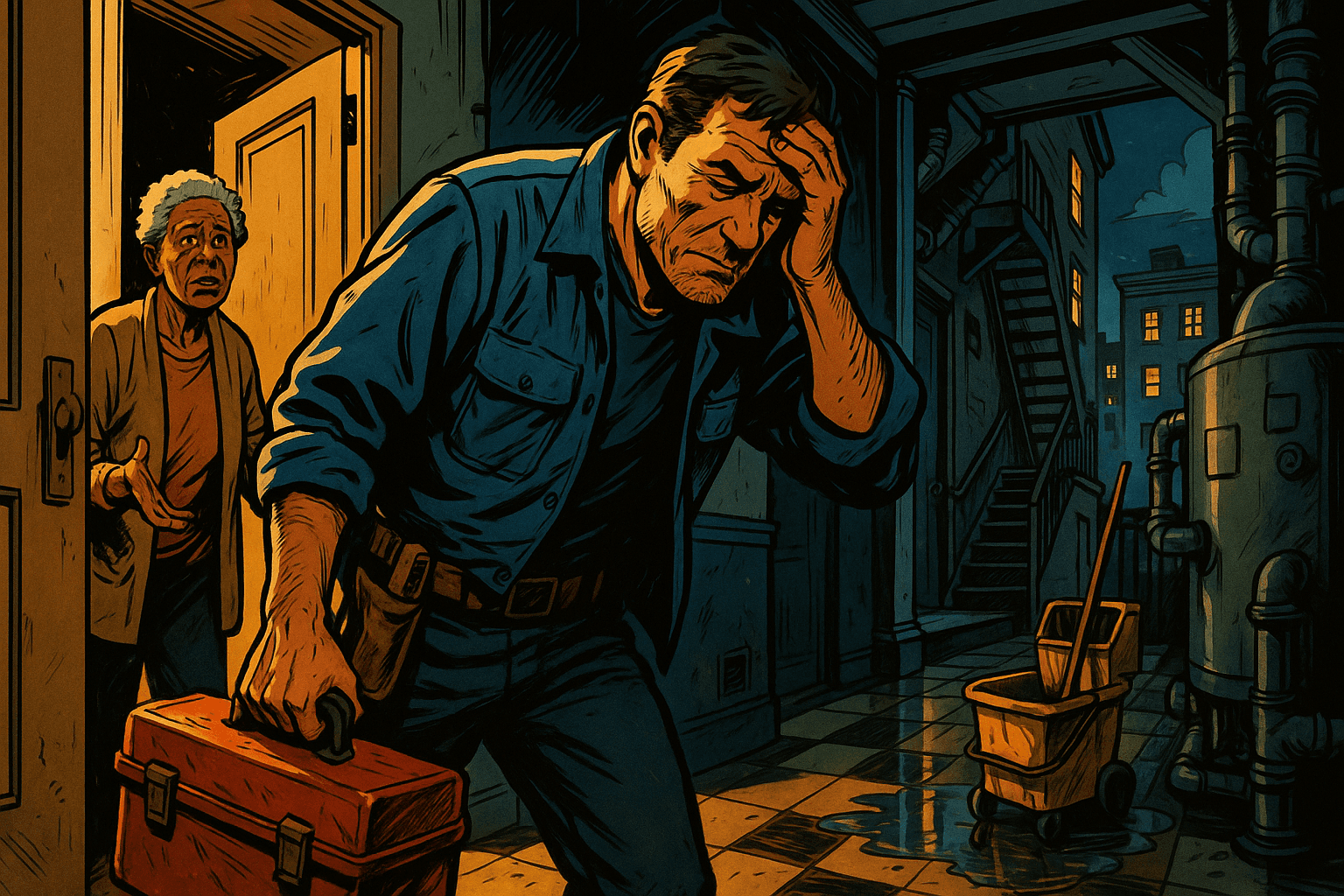
Nobody warned me that the hardest part of this job wouldn't be the boilers or the work orders, it would be the people, and how much of their weight I'd end up carrying home. This isn't a post about solutions. It's about naming something that doesn't get named enough in this line of work.
Nobody tells you this part when you take the job.
They talk about mechanical systems, emergency response, work orders, unit inspections. They cover the physical side, the long days, the fact that a pipe doesn't care that it's 3 p.m. on a Friday. That stuff I understood going in. I signed up for it.
What I didn't fully understand, what I don't think you can fully understand until you're living it, is the human weight this work carries. Especially in subsidized housing. Especially when you're the person who's just... there. Every single day.
You Become the Constant
In a building like mine, a lot of residents don't have a stable network around them. Some of them have family, some don't. Some have support workers who come and go, case managers who rotate, services that get cut or rescheduled. But I'm here. Monday through Friday, 8 to 4:30, and residents know that. They know my face. They know my name. They know I'll answer if they knock.
That consistency matters to people. I've come to understand that. And most days I think it's one of the genuinely meaningful parts of this job, that just showing up, being reliable and decent, actually does something for people who haven't always had that.
But it also means you hear things. You see things. You notice when someone who's usually chatty goes quiet for a week, or when a resident who's been doing well starts looking like they're not sleeping. You pick up on it because you're paying attention, and you pay attention because you care.
And caring, over time, is expensive.
The Stuff That's Not in the Work Order
I had a resident knock on the office door once, not for a maintenance issue. Just to talk. They'd had a bad night. They were scared. They didn't have anyone else to call at that hour, and they knew I'd be in the next morning.
I sat with them for a bit. I listened. I pointed them toward the right supports and made sure they were okay before I got back to my day.
That's not in any job description I've ever read. But I'd do it again tomorrow. Most superintendents I know would.
The problem isn't the individual moments. The problem is what happens when those moments accumulate, when you're absorbing pieces of other people's hardest days, week after week, and there's no real outlet for it. No debrief. No supervision in the clinical sense. Just you, driving home, replaying a conversation and wondering if you said the right thing or missed something you should have caught.
The Guilt of the Boundary
Here's what I find hard to admit: sometimes I don't want to hear it.
Not because I don't care. I do. But there are days when I've already had a difficult morning, I've got three work orders stacking up, and someone wants to pull me into something heavy that I genuinely am not equipped to handle. Not my role. Not my training. And I know the right move is to redirect them to the proper supports, to be kind but clear about what I can and can't do.
I know that. I do it.
And then I feel guilty about it for the rest of the afternoon.
That guilt is something I wasn't prepared for. The second-guessing. The wondering if I was cold, or unhelpful, or whether the person actually got the support they needed after I redirected them. There's no follow-up report that lands on my desk confirming everything turned out fine. You just move on and hope.
What It Does to You Over Time
I don't think I'm burned out. But I've had stretches where I could feel the edge of it.
There's a version of this job where you stop feeling things because it's the only way to get through the day. I've seen that in other superintendents, a kind of flatness that sets in. They're not bad at the job. They're just done caring and they haven't quit yet. That worries me more than anything else about this line of work.
Because the caring is also what makes you good at it. If you stop noticing the person behind the work order, you start missing things. You lose the instinct that tells you something's off before it becomes a crisis. The human attentiveness and the professional attentiveness are connected in this environment. You can't fully separate them.
So the question I keep sitting with, and I don't have a clean answer, is how you stay open enough to be effective without staying so open that you're hollowed out by it.
The Part Nobody Talks About in Property Management Circles
I go to the occasional industry event, read the trade publications, sit in on webinars sometimes. The conversation is almost always operational. Systems, compliance, capital planning, vendor management. All of it necessary. None of it touches this.
There's almost no space in professional housing circles to talk about the emotional reality of the work. Especially for superintendents, who are kind of caught in the middle, not senior management, not social services, but expected to hold a building full of people together while staying squarely in our lane.
That silence doesn't mean other supers aren't feeling it. It just means nobody's saying it out loud.
I'm not sure why I'm saying it now, exactly. Maybe because I had a hard week and I needed to put it somewhere. Maybe because I think there's someone else reading this who's been carrying the same thing and wondering if they're the only one.
You're not.
Some days I manage the balance well. Some days something follows me home and parks itself at the dinner table. My wife has heard more than her share of anonymized building stories over the years, and I'm grateful she's patient with it.
But I don't have a framework for it. I don't have three steps. I'm just a person doing a job that matters, trying not to lose something in the process that I won't easily get back.
That's where I am with it.
Loading reactions…
Comments
New notes are reviewed before they appear. Be kind and on-topic.
Loading comments…
Related posts
The Psychology Behind Garbage Chaos in Subsidized Housing
Garbage problems in subsidized housing run deeper than laziness or bad habits. They're rooted in disconnection, neglect, and a breakdown of shared accountability that spreads through a building faster than you'd think. As a building superintendent, I've watched this cycle play out up close, and the damage it does goes well beyond a messy hallway.

10 Things People Don't Understand About Running a Subsidized Housing Building
Being a superintendent at a subsidized housing building in Toronto is nothing like people picture it. No, you don't live there, no, you're not on call 24/7 by choice, and yes, the phone still rings at 9 p.m. Here's the real picture from someone who's lived it.
Someone Was Urinating in the Stairwell
Camera footage confirmed why the stairwell kept smelling bad. The cleanup mattered, but so did handling the conversation privately and protecting the staff member left with the mess.